Drip Edge, Fascia Aprons & Ice-Prone Eaves: Small Metal Details That Prevent Winter Leaks
When a Northern Utah roof leaks in January, the trouble usually isn’t the big standing-seam panels — it’s the edge. The eave is where snowmelt, ice, and wind-driven water all collect at once, and the small metal details there decide whether that water sheds cleanly or wicks back under your roof and fascia. Drip edge, fascia aprons, and proper eave detailing are the least glamorous parts of a roof and the most common place winter leaks start. Here’s what every Weber and Davis County homeowner should understand before the next freeze-thaw cycle.
What Drip Edge Actually Does
Drip edge is a bent metal flashing installed along the eaves and rakes of a roof. Its job is simple but critical: carry water off the roof edge and into the gutter instead of letting it curl back against the fascia board and sheathing. Without it, water follows the underside of the shingle or panel by surface tension — a problem that gets much worse when ice forms at the edge.
- Protects the fascia and sheathing from rot caused by wicking water.
- Directs runoff into the gutter rather than behind it.
- Supports the roof-edge termination so panels and underlayment have a clean, finished edge.
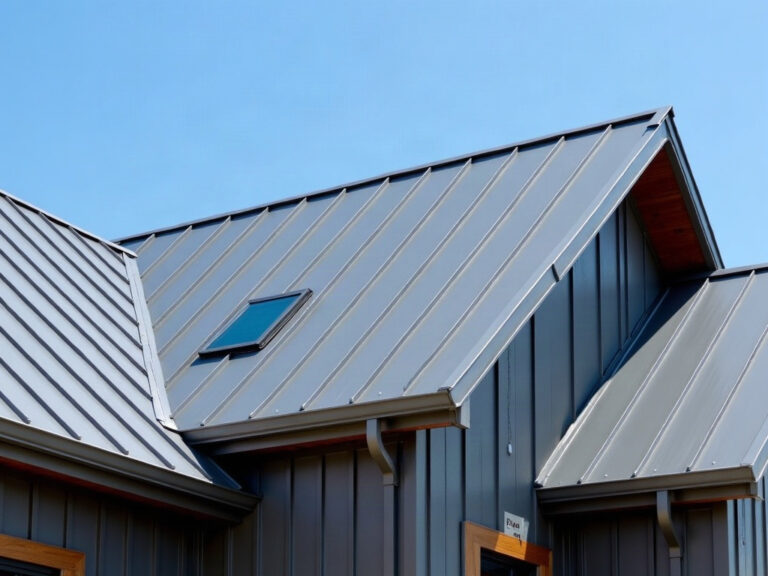
On a metal roof, the eave detail is often a custom-bent cleat or edge trim rather than a stock shingle drip edge. Getting the profile and hem right matters, which is why many Ogden-area roofs use custom fabricated flashing rather than off-the-shelf pieces.
Fascia Aprons and the Gutter-to-Roof Gap
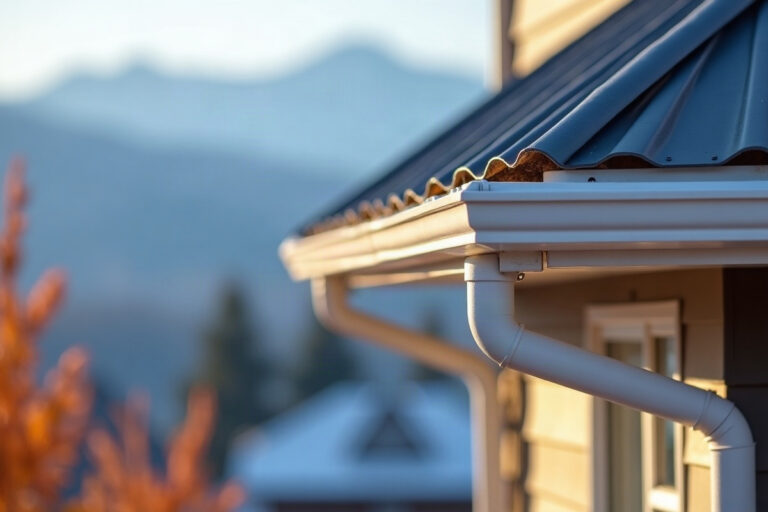
A fascia apron (sometimes called a gutter apron or kickout at the eave) bridges the gap between the roof edge and the back of the gutter. In Utah winters, that gap is exactly where ice dams push meltwater. When there’s no apron, or it’s too short, water finds the space between the gutter and the fascia and runs down behind it — soaking the fascia board, the soffit, and sometimes the wall below.
A correctly sized apron tucks under the roofing and laps over the back edge of the gutter so water has only one path: into the trough. Pairing good eave metal with a well-hung gutter system matters, which is why gutter and downspout work and edge flashing really should be planned together, not as separate jobs.
Why Ice-Prone Eaves Leak First
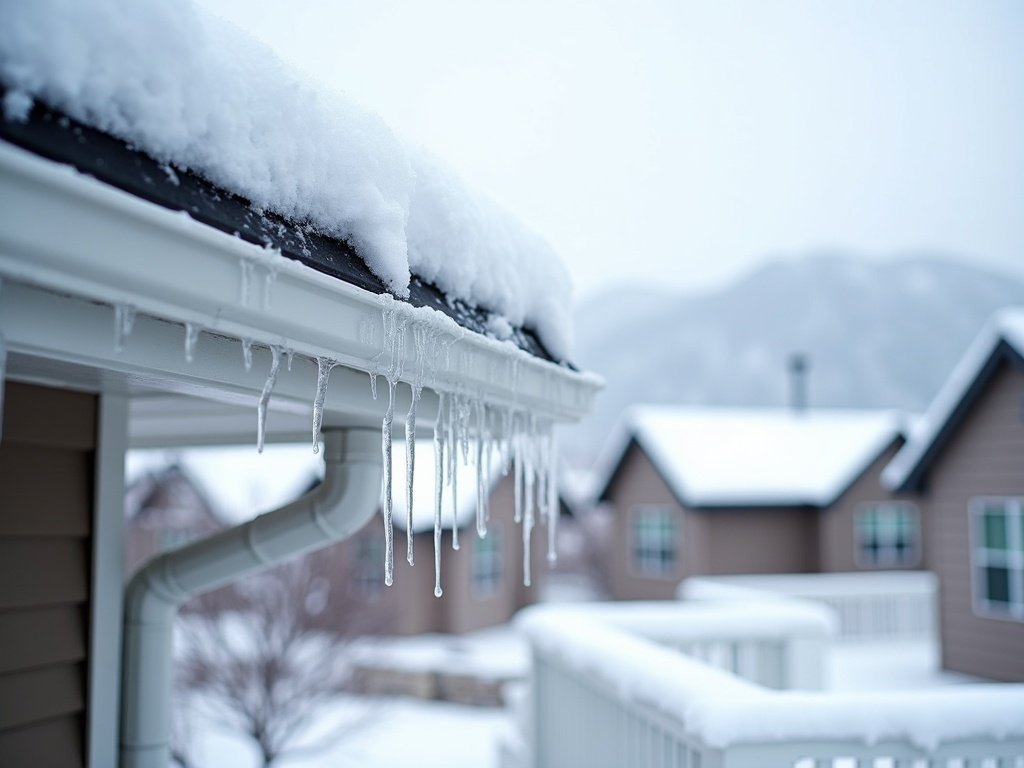
Utah’s freeze-thaw swings are hard on roof edges. During the day, snow on the warmer upper roof melts; at night, that meltwater refreezes when it reaches the cold overhang beyond the heated attic. Repeat this for a week and you get an ice dam — a ridge of ice at the eave that backs standing water up under the roofing. Good metal details don’t stop snow from melting, but they give that water a clean exit and a watertight edge so it can’t get under the roof while it waits to drain.
- Keep the eave detail continuous — gaps at corners and seams are where leaks begin.
- Extend underlayment past the drip edge at the eave for ice-dam protection.
- Keep gutters and downspouts clear so meltwater actually leaves the roof.
Signs Your Eave Details Need Attention
You usually can’t see drip edge or an apron from the ground, but the symptoms show up fast:
- Peeling paint or dark streaks on the fascia and soffit.
- Water stains on the ceiling or wall just inside an exterior wall.
- Gutters pulling away from the house, or water sheeting behind them in a storm.
- Visible rot or soft spots along the roof edge.
Caught early, these are small, affordable fixes. Left alone through a few Utah winters, they turn into fascia replacement and interior repairs.
Get Your Eaves Winter-Ready
If your roof edges are showing any of the signs above — or you’re building and want the eave details done right the first time — Omega Metals fabricates and installs custom drip edge, fascia aprons, and eave flashing for homes across Ogden, Weber, and Davis County. Call 801-731-5788 for a straightforward look at your roof edges before the next freeze-thaw cycle does the inspecting for you.