
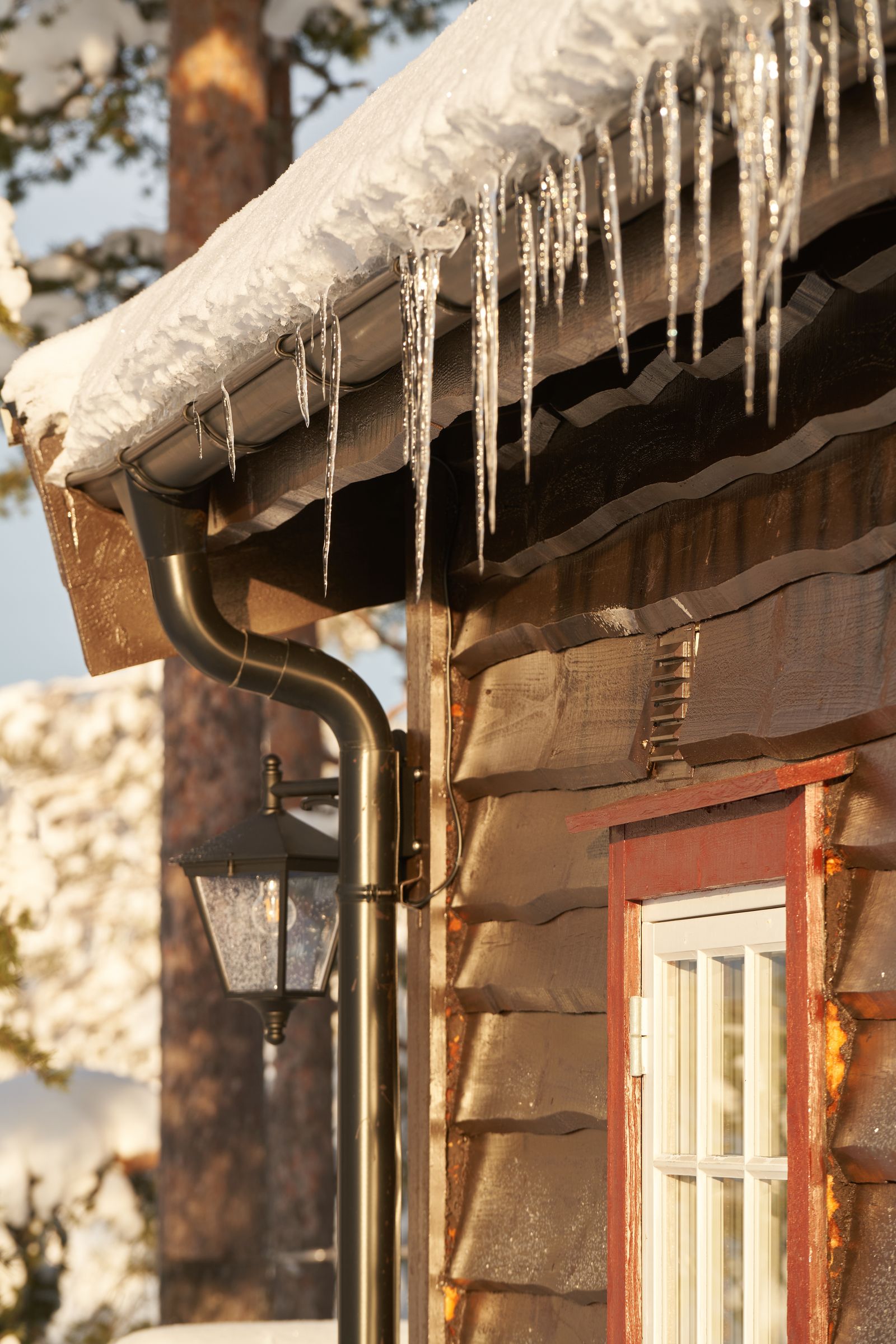
Snow-Ripped Gutter Repair in Logan & Cache Valley: Rehang, Replace, or Add Snow Retention?
In Logan and the rest of Cache Valley, gutters take a beating that homeowners farther south rarely see. Heavy mountain snowfall, deep overnight freezes, and the daily freeze-thaw swing all pile weight and ice onto a gutter that was only designed to carry water. By late winter it is common to find a section of gutter sagging, pulled away from the fascia, or ripped off entirely after a roof-load of snow slid into it. If that is happening on your home, the real question is whether to rehang it, repair it, or replace it — and how to keep it from tearing loose again next year.
Why Cache Valley Winters Tear Gutters Loose
Gutters fail in winter for a few predictable reasons, and knowing which one hit your home points to the right fix:
- Snow slides off the roof — a sudden release of snow from a metal or steep roof can hit the gutter with enough force to bend or detach it.
- Ice and standing water add weight — a frozen gutter can hold far more load than it was hung for, loosening spikes, hangers, and screws.
- Freeze-thaw works fasteners loose — repeated expansion and contraction slowly backs out old nails and pulls hangers away from the fascia.
- Ice dams back water behind the gutter — trapped meltwater can rot the fascia the gutter is anchored to, so the wood gives before the metal does.
A gutter that came down because of a snow slide is a different problem than one that slowly sagged over several winters, and each calls for a different repair.
Rehang, Repair, or Replace? How to Tell
Not every damaged gutter needs to be thrown out. Here is the general order of least to most involved:
- Rehang — if the gutter itself is straight and the trough is intact but it has pulled away from the house, re-securing it with new hidden hangers into solid fascia is often all it needs.
- Repair a section — a single dented or crushed run can sometimes be replaced on its own and tied back into the existing system.
- Replace — if the metal is creased, the seams have split, or the fascia behind it is rotted, patching rarely holds. A full replacement in a heavier-gauge, seamless profile is the more durable answer.
The honest test is whether the underlying fascia and the gutter geometry are still sound. When the wood is soft or the gutter has been bent past straightening, replacing is the fix that actually lasts through another Cache Valley winter.
Add Snow Retention So It Doesn’t Happen Again
If snow sliding off the roof is what took your gutter down, simply rehanging it sets you up to lose it again. The longer-term fix is to control the snow before it reaches the edge. Snow guards or a continuous snow rail hold the snowpack on the roof so it melts and sheds gradually instead of avalanching into the gutter all at once. On metal roofs in particular, snow retention and properly anchored gutters work together — one protects the other. You can read more about how we approach this on our gutters and snow rail page.
Why Seamless and Custom-Fabricated Gutters Hold Up Better
Older sectioned gutters leak at every joint, and those joints are exactly where ice pries them apart. Seamless gutters, formed in one continuous run, remove most of those weak points. For homes with unusual rooflines, deep overhangs, or heavier snow loads, custom-fabricated gutters, downspouts, and heavier-gauge hangers let us match the system to what your roof actually sheds. Our custom fabrication shop here in Northern Utah builds these to size, and if you are also planning drainage changes, our guide to seamless gutter installation walks through sizing and downspout placement.
Get Your Logan Gutters Inspected Before the Next Storm
If a gutter on your Logan or Cache Valley home is sagging, leaking, or already down, the best time to address it is before the next heavy snow. Omega Metals can inspect the gutter, the hangers, and the fascia behind it, then give you a straight recommendation on whether to rehang, repair, or replace — and whether snow retention makes sense for your roof. Call us at 801-731-5788 for a free estimate from a local Northern Utah crew that knows what these winters do.

